
The Frustration Every Cold Email Marketer Faces
You spend hours preparing a campaign.
You research prospects carefully.
You write a thoughtful email that actually provides value.
Then you launch the campaign.
And nothing happens.
No replies. No engagement. No conversations.
Later you discover the real problem: your emails never reached the inbox.
They were quietly sent to the spam folder.
This situation is extremely common in cold email outreach. Many marketers assume that if their message looks professional, it will automatically land in the inbox. In reality, email systems evaluate much more than the message itself.
Before an email reaches someone’s inbox, it passes through several filters designed to detect spam, suspicious behavior, and unknown senders. If your sending reputation is weak or your domain is new, those filters will often block your emails before they ever reach the recipient.
This is where email warm up becomes essential.
Email warm up is the process of gradually building trust with email providers so that your messages are recognized as legitimate. Without it, even well-written cold emails often disappear into spam folders.
Understanding how warm-up works can dramatically improve email deliverability and ensure your outreach campaigns actually reach real prospects.
What Email Warm Up Actually Means
Email warm up is the gradual process of increasing email sending activity from a new or inactive email account to build a positive reputation with email providers.
When a new domain or email account suddenly starts sending hundreds of emails per day, spam filters interpret that behavior as suspicious. This pattern closely resembles how spam operations behave.
Email providers such as Gmail, Outlook, and Yahoo therefore monitor several signals before deciding whether to trust a sender. These signals include sending volume, engagement rates, complaint levels, and domain reputation.
Warm-up helps establish a healthy sending pattern so email providers learn that your emails are legitimate business communication.
Instead of sending hundreds of emails immediately, warm-up gradually increases sending activity over time. This creates a natural reputation profile and signals that the sender is trustworthy.
Without this process, many cold email campaigns fail before they even begin.
Why Emails Go to Spam
Understanding spam filters is the first step to improving email deliverability.
Email providers use complex algorithms that analyze many aspects of each message before deciding whether it belongs in the inbox or the spam folder.
Several common factors often trigger spam filtering.
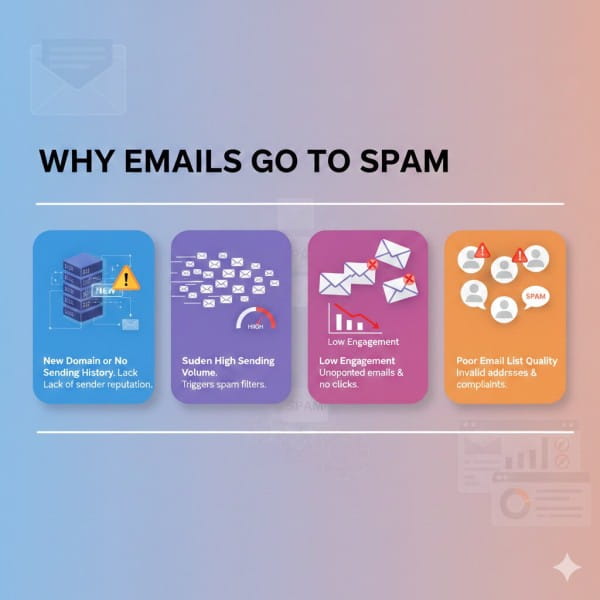
A new domain with no sending history is one of the biggest causes. Email systems have no data about the sender yet, so they treat the messages cautiously.
Another common issue is sudden high sending volume. If an email account that previously sent very few messages suddenly sends hundreds in a short time, spam filters often assume the account has been compromised or is being used for spam.
Low engagement is another major signal. If recipients frequently ignore emails, delete them immediately, or mark them as spam, email providers quickly reduce inbox placement.
Finally, poor list quality can severely damage deliverability. Sending emails to irrelevant contacts often results in complaints, which rapidly lowers sender reputation.
This is why successful cold email campaigns always combine targeted lead generation with responsible sending practices.
How Inbox Placement Actually Works
Inbox placement depends heavily on sender reputation.
Every domain and email account gradually builds a reputation score based on its behavior. Email providers use this score to decide whether messages from that sender should appear in the inbox, promotions tab, or spam folder.
Several factors influence this reputation.
Email Deliverability & Spam Analyzer
Consistent sending patterns help establish trust. When email volume grows gradually instead of spiking suddenly, providers see the behavior as legitimate.
Recipient engagement also plays a role. When people open emails, reply to them, or move them out of spam folders, it sends a strong signal that the sender is trustworthy.
On the other hand, spam complaints, bounced emails, and ignored messages reduce reputation quickly.
Because of these signals, warm-up strategies focus on building positive engagement signals before large campaigns begin.
A Practical Email Warm Up Strategy
Warm-up does not need to be complicated, but it must be gradual.
A typical warm-up strategy begins by sending a very small number of emails each day. These emails are usually sent to real contacts who are likely to open and reply.
Over the following days or weeks, the sending volume slowly increases.
For example, a new outreach domain might start by sending only ten emails per day. After several days of consistent engagement, the sending volume can gradually increase to twenty, then fifty, and eventually larger campaign sizes.
This process allows email providers to observe healthy sending patterns and positive engagement signals.
Warm-up also works best when combined with realistic sending schedules. Sending emails at consistent times during normal working hours helps reinforce legitimate behavior.
Patience is important here. Attempting to accelerate the warm-up process often causes reputation problems that take weeks to repair.
Why Lead Quality Directly Impacts Deliverability
Many marketers focus heavily on technical sending infrastructure but overlook an equally important factor: lead quality.
If your email list contains irrelevant or poorly targeted contacts, recipients are more likely to ignore or mark your messages as spam. This behavior quickly damages sender reputation.
High-quality lead generation dramatically improves deliverability because recipients are more likely to engage with the message.
Instead of sending emails to random contacts, professional marketers collect targeted leads from platforms where businesses actively share their contact information.
Tools such as Social Network Data Scraper – Email Extractor & Lead Generation Tool help marketers collect relevant business contact data from social platforms and online directories. By building lists of businesses that actually match the target audience, marketers increase engagement and reduce spam complaints.

Better leads lead to better responses, and better responses strengthen email reputation.
Local Lead Discovery and Email Outreach
For businesses that target local markets, Google Maps can become a powerful source of outreach leads.
Local businesses often list their contact information on their Google Maps profiles so customers can reach them easily. This creates a large directory of potential prospects across nearly every industry.
Marketers commonly search for businesses such as restaurants, dental clinics, gyms, or real estate agencies within specific cities.
Manually collecting this data is slow, which is why many outreach marketers rely on automation tools.
For example, Wasender includes a Google Map Data Extractor feature that allows marketers to collect business listing data from Google Maps results. This helps marketers build targeted prospect lists based on location and industry.

Targeted lists like these typically produce stronger engagement signals, which supports better inbox placement for cold email campaigns.
Sending Campaigns with Reliable Email Infrastructure
Once a warm-up period is complete and a targeted lead list is prepared, the next step is running outreach campaigns.
Cold email outreach usually involves sending hundreds or thousands of emails across multiple segments. Managing these campaigns manually is inefficient, which is why marketers rely on bulk email sending systems.
Software such as Atlas Bulk Email Sender allows businesses to manage large-scale email campaigns using their own SMTP configurations. This provides more control over sending infrastructure compared to standard webmail accounts.
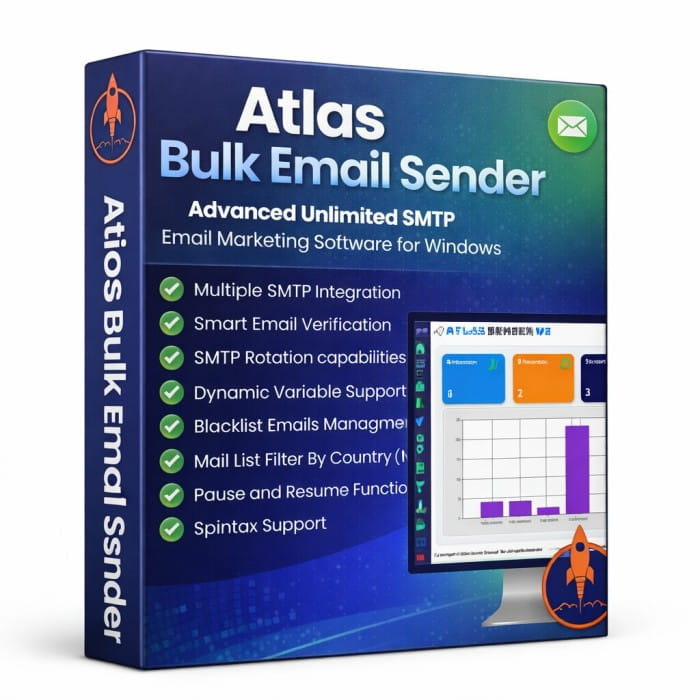
With proper infrastructure, marketers can manage sending limits, segment lead lists, and scale campaigns responsibly while maintaining good deliverability practices.
When combined with warm-up strategies and targeted lead lists, this approach creates a reliable foundation for outreach campaigns.
Common Mistakes That Destroy Email Deliverability
Even experienced marketers sometimes damage their sender reputation through avoidable mistakes.
One common mistake is sending too many emails too quickly from a new domain. This sudden volume spike almost always triggers spam filtering.
Another mistake is using low-quality email lists. Purchased lists often contain outdated or irrelevant addresses, which leads to high bounce rates and complaints.
Inconsistent sending behavior also creates problems. Sending large campaigns on one day and remaining inactive for long periods can make email providers suspicious.
Finally, many marketers ignore engagement signals. If recipients consistently ignore emails, reputation slowly declines over time.
Avoiding these mistakes and maintaining steady sending behavior helps protect long-term deliverability.
Building a Sustainable Cold Email System
Email warm-up is not just a one-time task. It is part of a broader outreach system.
Businesses that succeed with cold email marketing typically follow a structured workflow.
They continuously discover new leads, organize their contact lists carefully, and run outreach campaigns through reliable sending infrastructure.
A typical workflow might look like this:
Lead discovery
→ email extraction from social platforms
→ local business lead collection from Google Maps
→ email warm-up and reputation building
→ cold email outreach campaigns
When this process runs consistently, businesses create a predictable system for generating new conversations with potential clients.
Why Email Warm Up Is the Foundation of Deliverability
Email warm up might seem like a small technical detail, but it has a major impact on the success of outreach campaigns.
Without proper warm-up, even the best email copy and the most targeted lead list will struggle to produce results.
But when warm-up is combined with high-quality leads, reliable sending infrastructure, and thoughtful outreach messaging, cold email becomes a powerful tool for business growth.
Instead of disappearing into spam folders, your emails reach real prospects — and those prospects can turn into real conversations, partnerships, and clients.
And in a digital world where direct communication with decision-makers is increasingly valuable, mastering email deliverability gives businesses a clear competitive advantage.